
5 Signs a Tasting Menu Will Be Worth Your Time (and Money)
Booking a tasting menu Melbourne is a commitment of up to two hours, multiple courses, and a price tag that demands justification. There are a ton of different places to eat in the city, and not all of them fulfil their goal of offering a multi-course meal. Other degustation menus Melbourne are just fancy à la carte items in a fine dining package. Others are genuinely transformative.
Then, how to tell the difference before sitting down?
The answer lies in five specific, measurable signs. When a restaurant achieves all five, you're not paying for a meal; you're paying for an experience you cannot replicate at home, at a casual dinner or anywhere else.
This blog breaks down exactly what to look for when evaluating whether a tasting menu Melbourne is worth your time and money, using Shu Restaurant Melbourne's premier plant-based sichuan degustation as the benchmark throughout.
5 Signs a Tasting Menu Will Be Worth It
1. A Masterfully Paced Narrative & Flavour Progression
A good degustation menu Melbourne isn't a bunch of meals; it is a sequence. Each course has a specific role: to prepare your palate for what comes next, to provide contrast to what came before, and to contribute to an overarching culinary story.
The Sign
Menu has a rhythmic flow, from light, refreshing starters to rich and complex mains.
What to Look For:
A curated balance of temperatures and textures, starting with crisp raw preparations or silky chilled elements before moving into hot, smoky, or wok-charred territory.
Portion sizes calibrated so you arrive at the final dessert course satisfied, not overwhelmed.
A clear concept that connects all the plates: cuisine, region, philosophy.
A disjointed tasting menu is a red flag. If the dishes look random and disconnected, the kitchen isn't thinking about your experience as a whole. Atour restaurant, the 10-course progression is engineered to take the palate on a dynamic sensory journey, balancing intense sichuan spice with cooling elements and rich textures and pairing them with light, acidic counterpoints.
All of the transitions are purposeful. This is just the sort of thinking that allows you to distinguish the best tasting menu Melbourne has to offer from the expensive meal with good individual dishes.
2. Uncompromising Innovation (Offering What You Can't Make at Home)
The most honest test of a fine-dining tasting menu Melbourne is simple: could you recreate this at home, even with effort? If it is yes, then the value proposition breaks down.
The Sign
The menu centres on a unique culinary thesis, such as a modern, completely plant-based reimagining of a historic regional cuisine that demands specialised knowledge, equipment, and time far beyond what a home kitchen can provide.
What to Look For:
House-made, small-batch components: homemade sauces, specially crafted chilli oils, and fermentations and pastes created in-house over days or weeks.
The bold and multi-layered tastes that demand accuracy, like the numbing, mouth-coating heat of authentic sichuan peppercorns calibrated for contemporary palates.
Innovation in vegan food Melbourne at a genuine fine-dining level is rare. Most plant-based restaurants stop at approachable, casual formats. A vegan restaurant Melbourne that operates within the structure of a formal degustation and executes it without compromise is a different proposition entirely.
We sit at the intersection of traditional sichuan culinary technique and 100% plant-based cooking, a combination that eliminates the easy shortcut of high-quality protein and forces the kitchen to derive depth, umami, and texture from entirely different sources. That level of difficulty is where genuine value lives.
3. Deep Integration of Seasonal & Local Produce
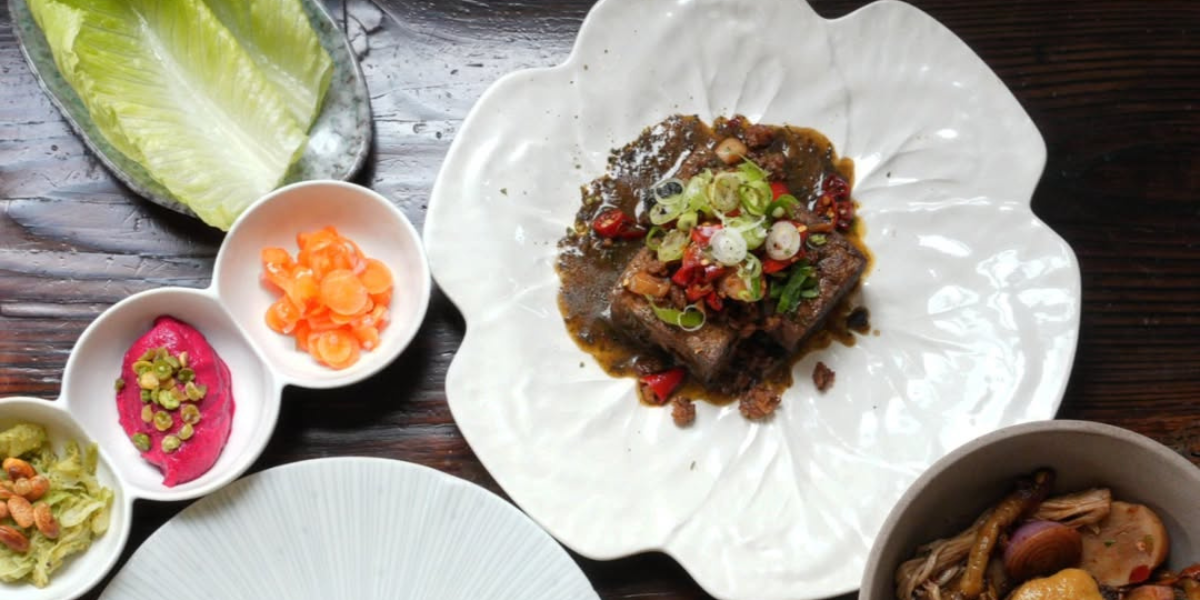
A kitchen that values its cuisine and its context is inspired by the world and based around local produce. The best tasting menu Melbourne will not serve you imported ingredients when superior local alternatives exist.
The Sign
There is a constant rotation of dishes to reflect the prevailing micro-season and a particular emphasis on the sourcing, with specific suppliers, regions and identifiable produce.
What to Look For:
Explicit mention of regional suppliers or partnerships with local farmers and producers.
Natural ingredients from native Australia are used in the menu, rather than a tokenistic approach.
Seasonal variation, meaning the degustation menu Melbourne you are served during the winter months is truly different from what you would be served in the summer months.
Atour restaurant, traditional sichuan methods meet premium local ingredients: wasabi leaf from Tasmania, Victorian almonds and seasonal root vegetables from Australian farmers. This approach is no gimmick. It is the practice of a kitchen that understands that flavour begins long before cooking. When the ingredient is exceptional, and the technique is precise, the result is a dish that could not exist anywhere else.
4. Meticulous Culinary Artistry Over Gimmicks
There is a category of fine dining that mistakes spectacle for substance: tableside smoke, gold leaf on everything, and theatrical liquid nitrogen. They aren't necessarily wrong, but if they replace authentic creativity, it tells you that the kitchen is prioritising Instagram over taste.
The Sign
All plates are beautiful and purposeful, and the presentation enhances the food's taste rather than distracting from it.
What to Look For:
Plating concepts that are conceptually coherent, such as a "daikon pot plant" that plays with the vegetable's earthy character or a visual motif that reflects the cuisine's cultural origin.
Deliberate, but functional, contrasts in texture, such as smoky, tender roasted eggplant and the deep crunch of a chinese doughnut, make the dish more interesting to eat, not just to photograph.
Restraint. The best tasting menu Melbourne diners consistently recommend knows that less is more.
The difference between artistry and gimmick is a matter of intent. Whether you are exploring vegan food Melbourne for the first time or returning as a seasoned fine-dining regular, you will notice the difference at our restaurant immediately.
All of the visual elements are in place for a reason; they serve a purpose in the eating experience. The presentation reflects the precision of the cooking, which is what justifies the price point.
5. Attentive, Unrushed Hospitality & Cohesive Pairings
The food is half the experience. The other half is how the evening is managed. A two-hour degustation that feels rushed, or where staff cannot speak to the dish they are placing in front of you, undermines everything the kitchen has built.
The Sign
Front-of-house staff are deeply knowledgeable about the origin, story, and flavour profile of every course, and the pace of the evening is controlled without ever feeling pressured.
What to Look For:
Genuine adaptability to dietary requirements. A vegan restaurant Melbourne that also caters to those with gluten-free and allium-free diets provides a true culinary array without compromising the experience if these restrictions are communicated in advance.
Beverage pairings that do actual work: premium local wines, custom cocktails, or curated sake selections engineered to cut through or elevate the flavour notes of the food, not just accompany them.
A hospitality rhythm that allows you to breathe in between meals, ask questions and be present without having to feel like the table needs to be cleared by 8:30.
Atour restaurant, our team understands the sichuan culinary tradition behind every dish on the degustation menu Melbourne and communicates it in a way that adds context and appreciation to each course. It's the entire experience, from food to service, pacing, pairings, and everything in between, that makes the first-time visitor into a repeat guest.
Why Shu Restaurant
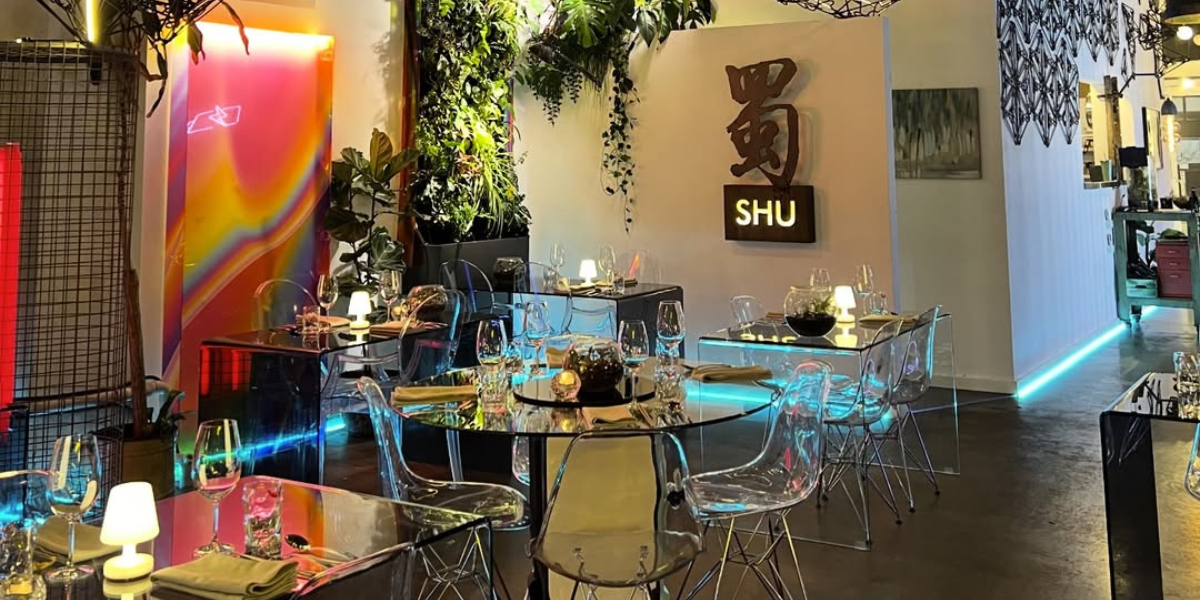
Shu Restaurant in Collingwood delivers against all five signs. It is Melbourne's only fine-dining venue dedicated to modern, plant-based sichuan cuisine, a culinary positioning that is singular in Australia.
The 10-course vegan degustation menu Melbourne is not a compromise. It is a genuinely ambitious, technically demanding menu that uses 100% plant-based ingredients to explore one of China's most complex regional cuisines.
As a vegan restaurant Melbourne operating at a fine-dining level, Shu has earned consistent recognition precisely because it refuses to treat plant-based cooking as a limitation. Each course is seasonal, locally sourced (where possible), visually thought out and tastefully seasoned.
For diners searching for the best tasting menu Melbourne has available in the plant-based space or any space, we represent a rare convergence of innovation, technique, and hospitality executed at the highest level.
Taste every layer of plant-based Sichuan Cuisine — reserve your table now!
Book NowConclusion
A tasting menu Melbourne is worth your time and money when it earns every course. The five signals are obvious: a well-told story that builds and develops a savoury journey, inventiveness which isn't easy to create at home, the use of seasonal and local ingredients to great effect, a strong artistry that avoids gimmicks and an attention to hospitality with a purposeful pairing.
Once they all fall in line, a degustation menu Melbourne is no longer an over-priced dinner but rather a thing to chat about for years to come. With a dining culture of this magnitude, Melbourne offers true world-class multi-course dining experiences; you just need to know where to find them before you book.
If you are ready to experience the best tasting menu Melbourne has to offer in the plant-based space, bold, innovative, and rooted in one of the world's great regional cuisines, book your table at our restaurant in Collingwood.