
What Is Fusion Cuisine? A Vegan Take on East Meets West
Melbourne has earned its reputation as one of the world's great food cities not by copying culinary traditions, but by refusing to stay within them. Go to Collingwood any evening of the week, and cultures will be hitting each other on a plate. “East meets West” is not a marketing statement here; it is what takes place in the kitchen in this city.
Fusion cuisine is at the core of such a collision. It is the intentional act of drawing on two or more culinary traditions to create something that would not have been possible in any of the cultures. Done well, it is among the most creative forms of cooking. Done poorly, it is a gimmick.
SHU Restaurant occupies the more serious end of that spectrum. SHU is the top vegan restaurant in Collingwood, Johnson Street, 147, Melbourne, which is founded on the philosophy of modern sichuan, which is a fusion style at its core. It captures the heat, the ferments and the numbing complexity of sichuan cooking and translates it with a 100% plant-based prism through the application of modern Australian technique.
What Is Fusion Cuisine?
Intentionality
Fusion cuisine is not a coincidence. It is not a chef throwing miso into a bolognese and calling it innovative. Authentic fusion starts with profound respect for the source traditions, which is followed by a conscious choice to take out, combine and transform. It is the deliberate nature that makes the difference between true fusion and plate confusion.
An experienced fusion master knows the logic of each cuisine and breaks it. They understand why sichuan food is made with fermented black bean paste and why this ingredient is important for creating umami richness. Only after this understanding do they begin to consider how that logic of flavour applies in a Western plating context. The innovation is always based on understanding.
The Three Pillars of Fusion
Cultural Blending
Cultural blending, the most apparent aspect of fusion cuisine, is the integration of ingredients, techniques, and flavour allusions from different culinary traditions. In our restaurant, this is set to come in the form of matching Sichuan peppercorns (a spice that creates a rare lip-numbing, citrusy burn that is almost impossible to find elsewhere) with textures and presentation that are all too decidedly modern Western fine dining. The two elements do not dilute each other. They polish one another.
Balance of Flavours
When one tradition becomes dominating and the other a decoration, fusion fails. A good fusion cuisine has the true balance of the entire flavour spectrum, sweet, salty, sour, spicy and umami in harmony. This balance is already inherent in sichuan cuisine; spice profiles are never just single-dimensional. Once the same principle is applied to plant based cuisine, the absence of protein gives even greater attention to layering flavour through technique rather than protein.
Ingredient Innovation
The third pillar is the sourcing. The decision to recreate ancient Sichuan flavour profiles using local produce in Melbourne is not only a sustainability choice but also a creative one. Australian vegetables, native herbs, and fungi that grow seasonally provide a freshness and specificity that imported products can never achieve.
Taste every layer of plant-based Sichuan Cuisine — reserve your table now!
Book NowThe Vegan Advantage: Why Fusion Works for Plant-Based Dining
Breaking Boundaries
Eliminating protein from a vegan menu does not diminish a cuisine; it re-centres it. When protein is no longer the centrepiece, texture and spice complexity move to the front. This is the area of sichuan cooking excellence. The numbing, layered heat of Sichuan peppercorns; the deep savouriness of fermented chilli pastes; the contrast between silken and crisp, all these are perfectly plant-friendly and, in most instances, are enhanced by the absence of protein.
Plant based cuisine on this premise is not restrictive. It is all about refocusing culinary attention on aspects that traditional cooking often overlooks.
Health & Adventure
One of the persistent criticisms of vegan food options is that they default to beige: processed replacements, cold salads, and food that gives off a virtue signal instead of a pleasure signal. Fusion cuisine breaks that down completely. When you introduce diverse fermented pastes, ancient grains, aromatic spice blends, and techniques like pickling and slow braising into a vegan menu, you get both nutritionally rich and truly exciting food.
This is the distinction between vegan food options, which exist to meet a requirement, and a vegan degustation, which is the main event. The philosophy at our restaurant makes plant-based eating an experience, rather than a supplement.
Melbourne Context
The vegan restaurant industry in Melbourne is elite, and educated patrons frequent it. Many search for experiences like vegan pho Melbourne or vegan yum cha, which are excellent entry points. But fusion cuisine extends the conversation further.
Our 10-course vegan degustation does not replicate a single tradition. It develops a new one, course after course, with the logic of sichuan flavour as its foundation and the language of modern Australian sensibility as its words. This is where that journey can start with diners who have already experienced vegan pho Melbourne and are willing to go beyond the familiar towards something that truly is new.
How to Spot "Good" Fusion vs. "Forced" Fusion
Balance Is Key
In hindsight, it seems that excellent fusion cuisine is inevitable. You have a meal, and you think, "Of course, these two things are meant to go together." Forced fusion will create the opposite effect: a feeling that the elements are fighting with each other and that the combination was made because it was new, not because it was in harmony.
The test is straightforward: does each ingredient work in the dish? In our restaurant, the ancient sichuan spices are not presented as one of the flavour notes to a more traditional Australian dish. They are structural. The vegan menu in this case is constructed based on built-in fusion rather than adornment.
Respect for Roots
Good fusion cuisine never abandons its origins. SHU remains authentically Sichuan in flavour, the chilli heat, the numbing peppercorn, the fermented depth, while being fully modern in execution. This is a significant difference. Authenticity in fusion does not imply the exact re-creation of a dish as it is in Chengdu.
When a cuisine is admired but not exploited for aesthetic value, the food displays it. Those people who are familiar with sichuan cuisine will appreciate our flavours instantly. New diners who have never tried plant based cusine will be able to tell, instinctively, that there is a logical basis to what they are consuming and that there exists a history behind the food.
"East Meets West" at SHU Restaurant
Modern Sichuan Philosophy
SHU Restaurant was constructed with a well-understood philosophy: take the heart of sichuan chilli oils, the fermented pastes, and the aggressive umami architecture, and use them in elegant, Western-style plating and structure. The outcome is modern sichuan, a plant based cuisine that is not to be found in China, nor to be found in traditional Australian fine dining. It exists here, in Collingwood, because Melbourne is where these two traditions can meet without either one needing to apologise for being itself.
Signature Fusion Elements
Technique
Our kitchen draws from both culinary worlds at the technique level, not just the ingredient level. Traditional sichuan stir-frying and pickling are placed next to Western roasting techniques and textural experimentation, such as black tahini soil, a fine crumbly component that provides both flavour depth and texture at the same time. This fusion cuisine is at its finest: the technique of one culture, the expression of another, the two coming together to produce something that neither could have done on its own.
Dish Spotlights
Three dishes from our vegan menu illustrate the philosophy clearly.
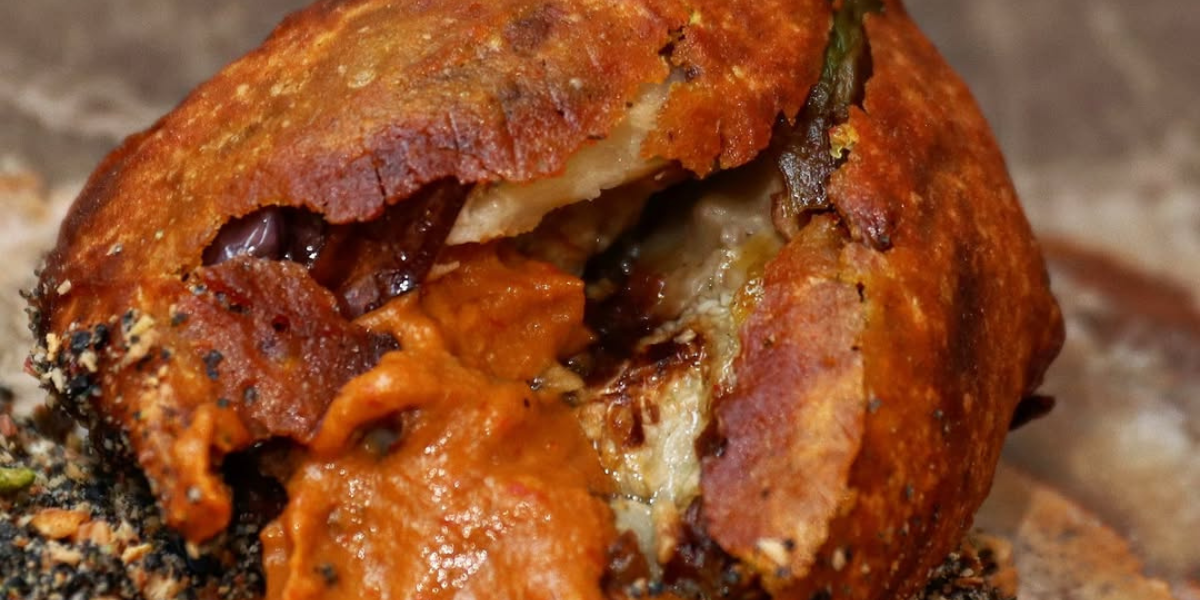
The Yuxiang roasted eggplant is a literal mention of a traditional Sichuan flavour combination, yuxiang, which is a fermented chilli, ginger, garlic and vinegar sauce, which fits well into plant based cuisine. At SHU, it is applied to slow-roasted eggplant, the Western technique amplifying the vegetable's natural sweetness against the sauce's sharp, savoury depth.
Lion's mane mushrooms braised in rock sugar, and chinese five spice provide a umami that needs no alternative. This is what the ingredient is designed to do. Silken tofu avo crackers combine one of the most subtle textures in East Asian cuisine with a distinctly Australian ingredient and are bound together by a crisp vehicle that provides structure.
None of these dishes are novelties. Each one is a considered, complete plate, which is what you anticipate from a serious vegan restaurant.
Taste every layer of plant-based Sichuan Cuisine — reserve your table now!
Book NowThe Experience
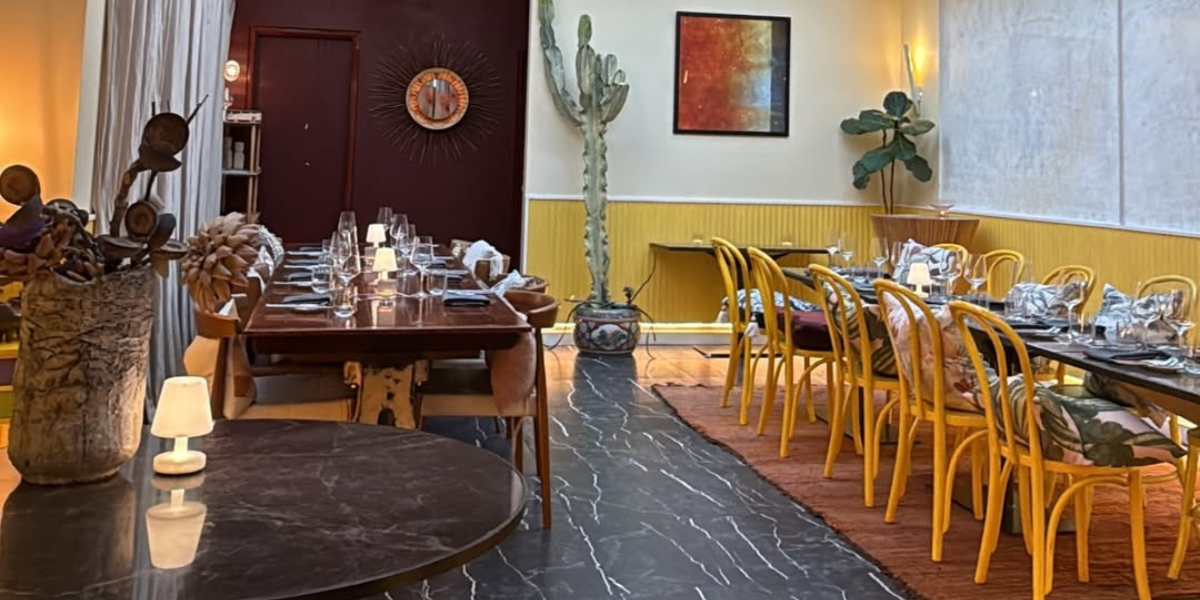
The setting at our restaurant matches the food: a neon-lit, industrial Collingwood space that is unmistakably Melbourne in its aesthetic while drawing on the energy and density of East Asian cities. The story of fusion cuisine includes the environment. Visitors do not get taken to a kind of China or to a typical fine dining room. They exist in an area that is neither tradition nor the other, which is precisely the point.
For those who prefer a more relaxed format, the weekend vegan yum cha at our restaurant provides the same modern sichuan accuracy in a shared, social setting, unlimited and entirely plant-based. It stands next to the vegan degustation as an indication that vegan food options do not necessarily imply one dining format or one price range. The food is the constant; the format flexes.
Conclusion
Fusion cuisine, at its best, celebrates what happens when culinary traditions people take seriously enough to combine with precision and respect. It is not about novelty. It is about what becomes possible when chefs stop treating cultural boundaries as limits and start treating them as starting points.
We demonstrate what that looks like when plant based cuisine is the medium. The 100% vegan menu here is not a constraint, but the fact that leads the fusion cuisine to be more precise, the flavours more planned, and the experience more unique.
Whether you arrive having already explored vegan pho Melbourne and vegan yum cha across the city, or this is your first encounter with a dedicated vegan restaurant, SHU is where vegan food option are no longer a category but a destination.
Book the 10-Course Vegan Degustation or join the weekend Vegan Yum Cha at SHU and taste exactly what modern sichuan fusion cuisine can be.Reserve your table here.